Iceland (Golden Circle · South Coast · Snæfellsnes)
An Iceland road trip in a 4x4: Golden Circle, South Coast, Jökulsárlón and Snæfellsnes in 7 nights
Our 7-night Iceland road trip in a 4x4 with friends: the Golden Circle, the South Coast waterfalls, the Jökulsárlón glacier lagoon, Kirkjufell and what

Iceland had been on my list for years, but it always ended up as an open browser tab. Until one night, beers in hand, Dani — a mate from uni, co-pilot on a thousand trips and the only one who puts up with my road playlists — came out with the classic "if we don't sort it now, we never will". By the next day we were already looking at flights. We were clear on it from the start: no organised tours, no basing ourselves in Reykjavík and driving back every night. We wanted a car, a loop route and the freedom to stop every time the landscape asked us to get out.
It was the two of us, flying out of Madrid, and we built the seven nights with tuPetate's help into a very clean arc: fly to Keflavík, pick up a 4x4 there and drop it back at the same airport so as to close the circle without retracing a single kilometre. One night in Reykjavík on arrival, two in Vík (with the Golden Circle on the way and the South Coast waterfalls the next day), two beside the Jökulsárlón glacier lagoon, one at the foot of Kirkjufell in Snæfellsnes and the last one back in the capital. We chose July on purpose: it's when the days are endless — in high summer the sun barely sets — and when the mountain roads and the glacier tours are open.
Here's how it went, what blew our minds the most and a handful of things worth being clear about before you leave: why a 4x4 here isn't a whim, how you check the state of the roads before each stage, why you must never turn your back on the sea at Reynisfjara, and that Iceland, outside the EU, punishes your wallet if you don't plan the phone side of things sensibly.
Arriving in Reykjavík: the 4x4, Hallgrímskirkja and the harbour

We landed in Keflavík in the afternoon, picked up the 4x4 at the airport itself — a four-wheel-drive SUV, which here isn't a luxury but common sense — and drove the forty-five minutes to Reykjavík in that strange, whitish eleven-o'clock-at-night light that still feels like late afternoon. We dropped the bags at the Downtown Guesthouse Reykjavík, central and right by the bars, and went out to stretch our legs with no watch on.
First stop, Hallgrímskirkja: that grey concrete church that looks like a petrified lava flow or a giant organ pointing at the sky. We went up its tower, which gives the best panorama of the city — the coloured rooftops, the bay, the snowy mountains in the background — and then walked down to the old harbour, the Gamla höfnin, with its fishing boats and the salty air.
We had dinner at Matur og Drykkur, near the harbour: modern, honest Icelandic cooking, lamb, cod and skyr, that thick yoghurt that's in everything here. Dani, who eats little and watches a lot, ended up scraping his plate clean. The first night in Iceland, with a full stomach and the feeling that the trip was really beginning.
The Golden Circle on the way to Vík: Þingvellir, Geysir and Gullfoss

The second day was one of the big ones, and on top of that on the way to the South Coast, barely straying from the route. We set off early towards the Golden Circle, the Icelandic classic, and the first stop was Þingvellir: a valley where the North American and Eurasian tectonic plates are literally pulling apart beneath your feet, leaving a rift you walk through with rock walls on either side. It's a World Heritage Site and this is where the Icelandic parliament was born more than a thousand years ago; it has that mix of geology and silence that leaves you speechless.
Then, Geysir, where the Strokkur geyser spits out a column of boiling water every five or ten minutes. You stand staring at the turquoise pool, waiting, and suddenly it bursts upwards through the steam and the "oooh" of the crowd. And to round off the trio, Gullfoss, a brutal double waterfall dropping in two steps into a canyon, the spray throwing up rainbows if the sun catches it. You hear the roar before you see it.
From there, about 230 kilometres skirting the South Coast to Vík, the southernmost little village in Iceland. We settled into the Guesthouse Vellir, simple and with views of Mount Pétursey, and had dinner at Halldórskaffi, the most popular spot in the village: hot soups, a lamb burger and the kind of comforting Icelandic dishes you want after such a long day.
South Coast waterfalls and the black-sand beach of Reynisfjara

Based in Vík, we gave the whole day to the jewels of the South Coast, all less than eighty kilometres from one another. First Seljalandsfoss, a thin, towering waterfall with the bonus that you can walk right around behind it, between the rock wall and the curtain of water. Take a proper waterproof, because you come out soaked, but seeing it backlit from inside is worth every drop.
A few kilometres on, Skógafoss, a wide, thundering wall of water dropping straight down. We climbed the 527 steps that lead to the upper viewpoint — Dani counting them out loud to liven up the suffering — and from the top the waterfall looks tiny and the horizon opens out towards the sea.
We finished at sunset at Reynisfjara, the black-sand beach of Vík: perfectly hexagonal basalt columns forming a stepped wall, the Reynisdrangar sea stacks rising from the water and, in July, puffins nesting in the cliffs with their cartoonish, colourful beaks. One very serious warning we repeated like a mantra: never turn your back on the sea. There are 'sleeper waves' here, treacherous waves that surge far higher up than they seem and have swept people away; the water looks calm and suddenly it reaches you. Enjoy the beach, but facing the water and at a distance.
Heading east: the Fjaðrárgljúfur canyon and the glacier lagoon

The fourth day meant kilometres: about 200 to the east, leaving behind the green South Coast to enter an increasingly lunar landscape of moss-covered lava fields and endless sands. The morning's star stop was the Fjaðrárgljúfur canyon: a winding rift a hundred metres deep and two kilometres long, with a river at the bottom and a path along the rim from which you peer into the abyss. The light falling between the green walls makes it almost unreal.
We carried on towards Jökulsárlón, and here the trip changed gear. We stayed at the Fosshotel Glacier Lagoon, ten minutes from the lagoon, with views of the glacier tongues hanging off the mountains. We dropped the bags and rushed to see the icebergs at sunset — which in July is an endless, unhurried sunset — with the blocks of blue ice drifting slowly out to sea and the silence broken only by some distant crack.
We didn't have dinner at the lagoon; instead we took the chance to head over to Höfn, the Icelandic capital of lobster (humar), to eat at Pakkhús, the most famous restaurant in the area. Freshly caught lobster, simple and spectacular, in an old wooden warehouse on the harbour. The kind of dinner you remember.
Jökulsárlón, Diamond Beach and the glacier on foot

The full day in the Jökulsárlón area was the heart of the trip. In the morning, an amphibious boat tour around the lagoon: a vehicle that drives into the water and sails among the icebergs, so close you can see the ice in a thousand shades of blue and, with luck, a seal poking its head out with a long-suffering face. It lasts about forty minutes and, although it isn't cheap, living the ice from inside the lagoon is priceless.
Just across the road is Diamond Beach: the icebergs that escape the lagoon out to sea wash back up onto the black-sand beach, where the surf polishes them until they look like giant diamonds on the jet-black sand. We spent a good while hopping from block to block, photographing the light shining inside them.
In the afternoon we went over to Svínafellsjökull, a glacier tongue you reach on foot near Skaftafell, with free parking. Getting close to the glacier's snout, seeing the dirty, cracked ice up close, feeling the cold air coming off it… it's striking. To actually walk on it you need a guided tour with crampons, but just walking to its base is enough to grasp the scale. The perfect afternoon before the big stage the following day.
The big drive to Snæfellsnes and Kirkjufell under the night light

The sixth day was the longest behind the wheel: about 350 kilometres skirting the coast, leaving behind the southern glaciers to head up to the Snæfellsnes peninsula, in the west. It's a long one, yes, but the Icelandic road is one of those where the driving itself is part of the plan: lava fields, fjords, Icelandic horses grazing and very few cars. We took turns at the wheel and stopped to stretch our legs.
Before reaching our destination we stopped at Arnarstapi, on the southern coast of the peninsula, with its basalt cliffs bored through with lava arches and the sea breaking below, and at Djúpalónssandur, a beach of polished black pebbles where you can still see the rusted remains of an old shipwreck. Snæfellsnes has a reputation as "Iceland in miniature", and it shows: in a few kilometres you get glacier, lava, beaches and cliffs.
We reached Grundarfjörður and stayed at the Kirkjufell Guesthouse, literally at the foot of the most photographed mountain in the country. Kirkjufell is that mountain shaped like a pointed hat, with two twin waterfalls at its base. In July the sun barely sets, so around eleven at night, with that golden, horizontal light of the white nights, we walked down to photograph it at our leisure. We had dinner at Bjargarsteinn, in the village harbour, with fresh fish from the bay and views of the mountain itself. A perfect finish to the last night outside the capital.
Snæfellsjökull and back to Reykjavík
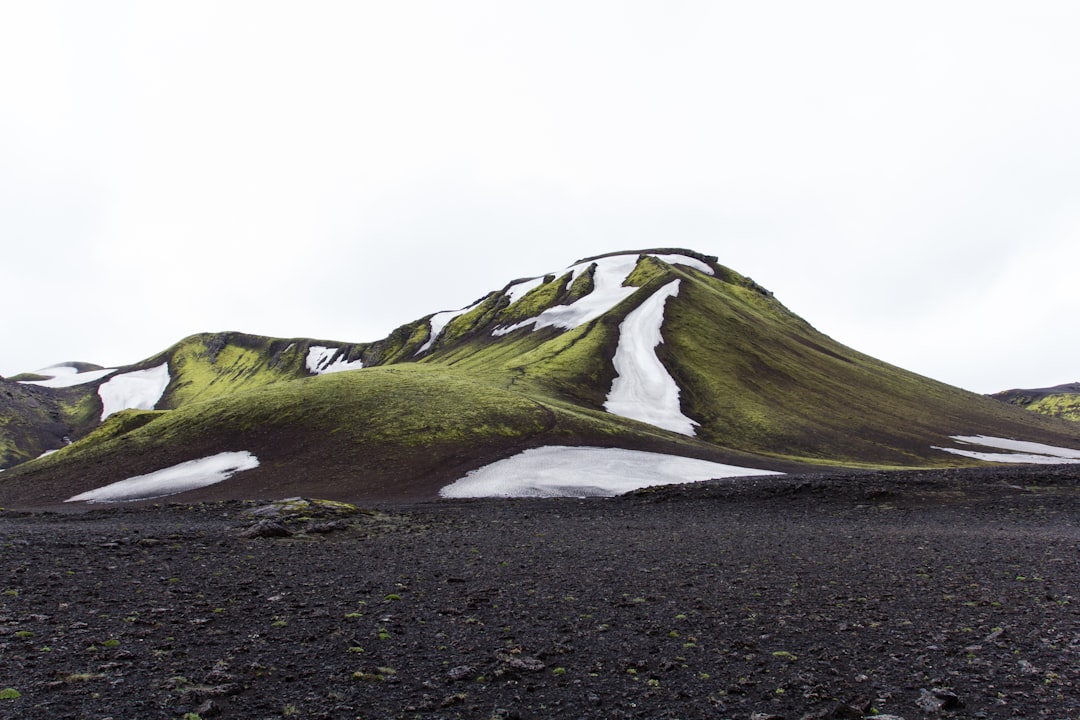
We gave the last full day to Snæfellsjökull National Park, on the tip of the peninsula, dominated by the volcano-glacier that gives the park its name: the very one Jules Verne chose as the entrance to the centre of the Earth in his novel. That alone makes you want to climb it. From June to September you can do a guided three- or four-hour excursion across the glacier with crampons and helmet; you have to book it ahead in summer, as it fills up. We had it in the plan as an option, and it's worth pencilling in early if walking on Verne's volcano ice tempts you.
With our bodies now asking for a city, we set off for Reykjavík, about 200 kilometres back to the capital for the final night. We stayed at the Centric Guesthouse Reykjavík, once again right in the centre, by the bars and restaurants.
We gave the last night to the city: a stroll down Laugavegur street, an Icelandic craft beer and the lingering after-dinner chat of people already taking stock of the trip. The next morning, dropping the 4x4 back at Keflavík and flying home to Madrid. Seven nights doing the loop without repeating a single leg.
The practical bits: driving, the 4x4, weather and paperwork

A couple of things we were glad to have clear before leaving. The 4x4 isn't a whim for this route: Route 1 (the ring road) is paved, but the turn-offs to glaciers and several stretches of Snæfellsnes are gravel, and if you fancy any F road — the ones that cross rivers through the interior — a normal car's insurance doesn't cover it and, in fact, it isn't allowed. Book the car with fully comprehensive insurance, because gravel and fords are common and a cracked windscreen can ruin your budget.
The golden local rule: check the state of the roads on road.is and the forecast on vedur.is before each stage. The weather in Iceland changes incredibly fast — you can have sun, rain, hurricane-force wind and fog all in the same day — and the wind is the one that surprises most: opening the car door without holding it firmly can rip it off. Drive calmly, respect the limits (90 km/h on tarmac, much less on gravel) and never leave the track to take a photo: Icelandic moss takes decades to recover.
Paperwork and connectivity: Iceland is in the Schengen area, so for a short tourist stay a valid ID card or passport is enough; confirm it anyway on the official country sheet before travelling and carry a document with plenty of validity. But careful, Iceland is NOT in the European Union, so roaming on your Spanish plan can be expensive: an eSIM takes the problem away and works a treat for the maps, the weather (vedur.is) and the state of the roads (road.is). The European health card doesn't apply here as in the EU, and on a trip with glaciers, trails and a lot of driving, good travel insurance brings peace of mind.
Frequently asked questions
- Do you need a 4x4 for this Iceland road trip?
- For this route, yes, we recommend it. Route 1 is paved and a normal car would manage it, but the turn-offs to glaciers and several stretches of Snæfellsnes are gravel, and if you're thinking of any F road (the interior ones that cross rivers) a car without four-wheel drive is neither insured nor allowed. Pick up the 4x4 at Keflavík airport and drop it back there to close the loop without retracing, and hire it with fully comprehensive insurance: gravel and fords are common.
- What's the best time to do this trip?
- Summer, from June to August, and July is ideal: the mountain roads and the glacier tours are open, the weather is at its best (within how changeable Iceland is) and these are the weeks of the white nights, with daylight almost all day. In exchange it's high season, so book flights, car and accommodation with margin. If what you're after is the northern lights, that's another trip: you have to go in winter, with dark nights and trickier roads.
- Can you see the midnight sun in Iceland in July?
- Almost, but it's worth being honest: Reykjavík and the route on this trip lie just BELOW the Arctic Circle, so the sun isn't literally visible at midnight. What you do get in July are the so-called white nights: the sun barely sets, it never goes fully dark and you have brightness practically 24 hours a day, with long, golden sunsets and sunrises that blur into one another. It's perfect for photographing places like Kirkjufell in the small hours. Bring an eye mask if you struggle to sleep with the light.
- Is driving in Iceland easy?
- Yes, driving is easy and it's the best way to see the country, but it has its rules. Route 1 is comfortable; the gravel asks you to go slower. What surprises most is the weather: check road.is (state of the roads) and vedur.is (forecast) before each stage, because the weather changes several times a day and the wind can be brutal — so much so that opening the car door without holding it can damage it. Respect the limits (90 km/h on tarmac), never leave the track when parking and refuel often, as petrol stations are scarce outside populated areas.
- Is it very expensive to travel to Iceland? How much does this trip cost?
- Iceland is one of the most expensive destinations in Europe, especially for accommodation, restaurants and alcohol. But you can plan sensibly: many of the wonders (waterfalls, canyons, black beaches, viewpoints) are free, shopping at the supermarket for lunch eases the bill a lot, and sharing the car and room between two brings the cost down quite a bit. A 7-night road trip for two friends, flights included, comes to around €3,000–3,500. The 4x4 for seven days, the flights and the five lodgings in July are the big line items.
- How much does this 7-night Iceland trip cost for two?
- Around €3,000–3,500 for two people, including the return flight Madrid–Keflavík, the 7-day 4x4, five lodgings, fuel, the amphibious tour on Jökulsárlón and a bit of glacier, insurance and an eSIM. Eating out in Iceland is what blows the budget the most — a lobster dinner in Höfn isn't cheap — so alternating restaurant and supermarket keeps the bill in check.
Trip cost, broken down
Flights Madrid–Reykjavík return (2 adults) Return to Keflavík (KEF), direct or with one stopover (~€350-550/person) | 900 € |
Hire 4x4 (7 days) Four-wheel-drive SUV picked up and dropped back at Keflavík, fully comprehensive (~€80-100/day) | 630 € |
Guesthouse in Reykjavík (2 nights) Downtown and Centric Guesthouse, central, arrival and return nights (~€130/night) | 260 € |
Guesthouse Vellir — Vík (2 nights) South Coast base, near Reynisfjara and the waterfalls (~€200/night in July) | 400 € |
Fosshotel Glacier Lagoon — Jökulsárlón (2 nights) With glacier views, 10 min from the lagoon (~€180-220/night) | 400 € |
Kirkjufell Guesthouse — Snæfellsnes (1 night) At the foot of Mount Kirkjufell, in Grundarfjörður (~€125/night) | 125 € |
Fuel for the loop ~1,300 km of route; fuel is expensive in Iceland | 200 € |
Activities (2 adults) Amphibious tour on Jökulsárlón (~€47/person) and the option of a guided glacier walk; waterfalls and viewpoints free | 150–350 € |
Travel insurance 2 people, 7 nights, with rescue and driving cover | 70 € |
Data eSIM Plan for Iceland (outside the EU), code TUPETATE for a discount | 20 € |
Meals and extras (estimate) Lamb and cod in Reykjavík, lobster in Höfn, a supermarket lunch | 500–700 € |
| Estimated total (2 adults) | 3.000 – 3.500 € |
Indicative prices gathered during planning. Flights, the 4x4 and accommodation vary by date; July is high season and Iceland is an expensive country for eating out.
Book this trip
The links take you to the provider to check availability and book each part of this itinerary.
- 900 €View →Flights Madrid–Reykjavík (return)To Keflavík (KEF), direct or with one stopover (~4-7 h) · 2 adults · Aviasales
- 630 €View →Hire 4x4 (Reykjavík/Keflavík, 7 days)Four-wheel-drive SUV, picked up and dropped back at Keflavík airport, fully comprehensive · DiscoverCars
- 130 €View →Downtown Guesthouse Reykjavík (arrival night)Central, by the bars and Hallgrímskirkja, for the first night (1 night) · Stay22
- 400 €View →Guesthouse Vellir (Vík)South Coast base, near Reynisfjara and the waterfalls, with views of Pétursey (2 nights) · Stay22
- 400 €View →Fosshotel Glacier Lagoon (Jökulsárlón)With glacier views, 10 min from the Jökulsárlón lagoon (2 nights) · Stay22
- 125 €View →Kirkjufell Guesthouse & Apartments (Snæfellsnes)At the foot of Mount Kirkjufell, in Grundarfjörður, ideal for the white nights (1 night) · Stay22
- 130 €View →Centric Guesthouse Reykjavík (return night)Right in the centre, by the bars to celebrate the end of the road trip (1 night) · Stay22
- View →Golden Circle: Þingvellir, Geysir and GullfossTectonic plates, the Strokkur geyser and the double waterfall of Gullfoss on the way to Vík · GetYourGuide
- View →South Coast waterfalls and ReynisfjaraSeljalandsfoss, Skógafoss and the black-sand beach of Vík with its basalt columns and puffins · GetYourGuide
- View →Amphibious boat tour on JökulsárlónAmong the blue icebergs of the glacier lagoon, with Diamond Beach next door (~€47/person) · GetYourGuide
- View →Guided glacier hike (Snæfellsjökull)The volcano-glacier that inspired Verne, with crampons and helmet; June to September only · GetYourGuide
- 70 €View →Travel insurance2 people, 7 nights, with medical, rescue and driving cover · ERGO
- 20 €View →Data eSIM for IcelandIceland isn't in the EU: data without surprises for maps, weather and roads, code TUPETATE for a discount · Holafly
Some are affiliate links: if you book through them we may earn a small commission, at no extra cost to you. Learn more.
Where to sleep?
Fosshotel Glacier Lagoon
A hotel with views of the glacier tongues hanging off the mountains, just ten minutes from the Jökulsárlón lagoon. It's the best base for seeing the icebergs without the crowds — first thing or already at night, with the soft, endless light of July's white nights — and for stringing together the lagoon, Diamond Beach and the Svínafellsjökull glacier without wasting time on the drive. The two prettiest nights facing the ice on the whole trip.
Affiliate link (Stay22 → Booking). If you book, we may earn a small commission at no extra cost to you.
Seven nights were enough for a really complete first Iceland: the Golden Circle with its tectonic plates and geysers, the South Coast waterfalls, the black sand and the puffins of Reynisfjara, the blue icebergs of Jökulsárlón and the ice diamonds on the beach, a glacier on foot and Kirkjufell silhouetted against the endless light of the white nights, all linked by a 4x4 and without retracing a single kilometre. The plan adapts without trouble — add another night closer to the glaciers, slip in the Skaftafell lagoon, swap the Snæfellsjökull hike for a soak in hot springs, or book the excursion on the ice if it tempts you. If you want an itinerary this detailed for your dates, with the flight to Keflavík, the 4x4 squared away, well-located accommodation, the activities in their place and up-to-date prices, just tell tuPetate and it builds it for you in minutes.
1 free trip when you sign up. We build your itinerary with real flights, hotels and activities in minutes.